Showing posts with label must have. Show all posts

Thursday, October 9, 2008

Throught The Cracks: Bob Dylan - Nashville Skyline

Through the cracks is a series on classic albums you should own if you don't. These aren't the most popular albums by the artist, but more likely one you may have overlooked.

Bob Dylan - Nashville Skyline
There have been thousands and thousands of pages spent trying to figure out what goes through the mind of Bob Dylan. You can make a career out of it. And that's just the way he likes it. There is probably no other artist that is so influential, yet so mysterious. The beauty of being Bob Dylan is that you have the ability to create whatever you want, for better or worse, without considering what people think. He has released 45 albums since his self-titled debut album hit the stores in 1962, some great, and some unfortunate. By the age of 21 he already created an evolving mythology about himself. Robert Zimmerman, scrawny Jewish boy from Minnesota had converted himself into road-wise hobo Bob Dylan. He claimed to have traveled the rails and learned songs from obscure musicians that he never met. He told stories about life on the road, populated with characters that existed only his mind. Along the way he picked up an affected Okie accent, reminiscent of his idol Woody Guthrie, and started using his own form of retro-hip slang. It didn't really matter that no one bought the wild stories or contrived persona. It created an aura around Bob Dylan that was bigger than himself. It was this new persona that could sing stories of pain, love and sorrow with the crackle of an old wanderer. Something a skinny kid from Minnesota could never have gotten away with. Throughout his career Dylan has been an enigma to even his "closest colleagues". He would often show up hours late for recording sessions. Walk in the door without saying anything, plug in, count off the beat and start playing. Many times the frantic musicians were hearing the music for the first time, straining to see Dylan's fingers so they could figure out the chord progressions. Rag tag numbers would be cut in single takes, while others would require intricate work. The time or attention didn't seem to affect the out come. Some classic Dylan songs were cut with less thought than the average advertising jingle might receive.

So, who knows what was going through Dylan's head as he laid down the tracks for Nashville Skyline in 1969? Although many of the studio musician assembled for the session had been on hand to record his two previous albums, John Wesley Harding and Blond on Blonde, none of them had more than a passing conversation with the elusive songwriter. They had no idea what they were to record. The first track cut for the album was the classic Lay Lady Lay (intended for the soundtrack of Midnight Cowboy but delivered too late). It was at this session that everyone would get their first hint of the "new sound" that Dylan would use on the upcoming album. First there was the issue of the drum track. Dylan told drummer Kenny Buttery that he wanted bongos on the track. Buttery then asked producer Bob Johnston what he thought, and Johnston suggested a cowbell. In part to show how silly and unfocused the direction was, Buttery had the studio janitor (a young Kris Kristofferson) hold a pair of cheap bongos and an old cowbell next to his set as he beat out an odd tick tock pattern. It turned out to be just what Dylan was looking for, and lends off-kilter timing to the song. The weirdness continued when Dylan stepped up to the mic and recorded his vocal. Instead of the throaty, croaking voice they were used to, Dylan unleashed a smooth croon. More Roy Orbison than Woody Guthrie. The lyric itself isn't necessarily remarkable, a standard love song, but the delivery shimmers. This is true of most of the songs on Nashville Skyline. The performance out shines the writing, certainly a change for Dylan. His countrified voice really stands out on the album's first song, a remake Girl from the North Country with Johnny Cash. This take was the result of an impromptu two-hour jam session between the two friends (a bootleg of this session circulates widely). Here the song sounds haunted, the two men playing sparse guitar and trading vocal leads. At one point they harmonize the chorus, Dylan's ethereal tenor floating above Cash's powerful baritone. While the looseness of the session is apparent, it is still a powerful remake of one of Dylan's most popular songs (first released on Freewheelin' Bob Dylan in 1963). One of the things that make this album work is the band. A collection of seasoned studio musicians that lend a polished, professional edge to the albums rag-tag country blues. They really shine on the instrumental Nashville Skyline Rag and the southern fried To Be Alone With You. As with most Dylan albums, not everything is perfect here. But whether he's delivering the emotional performance of I Threw it All Away or the vaudevillian sway of Peggy Day, it is all heartfelt. And some tracks, like the rockin' Country Pie whose fiery jam fades out at the end, makes you wonder what we didn't get to hear. Dylan has of course gone on to become one of the most important musicians of the 20th century. At 61, the enduring road warrior still criss crosses the country, delivering inspired performances night after night. That voice that seemed unlikely for a 20-year-old kid has matured into a powerful tool befitting an aging icon. Who knows why he chose to show the world another side on Nashville Skyline, but I'm sure glad he did. It's an album that could only be made by Bob Dylan, even if it sounds like someone else entirely. But maybe that's the moral of the Story of Bob. You can keep people wondering for 30 years and they'll always come back for moreas long as have the talent to back it up.

Tuesday, September 16, 2008

Through The Cracks: Elvis Presley - The Memphis Record

Through the cracks is a series on classic albums you should own if you don't. These aren't the most popular albums by the artist, but more likely one you may have overlooked.

Elvis Presley - The Memphis Record
On June 27, 1968 Elvis Presley waited nervously in the wings of the NBC’s Burbank, CA Studios. He was about to face one of the most important moments in his career. He hadn’t performed in front of an audience in over seven years. He had lost touch with the current music scene. While America’s youth was expanding their consciousness, he’d spent most of the decade making movies and recording soundtracks in Hollywood. Now the world was waiting to see if he still had that special spark. Elvis stepped out on the stage that night, a little nervous, but captivating as ever. Over the course of what has become known as the “The 68 Comeback Special”, Presley showed all the talent that had made him a star 15 years before. The highlight of the show was an informal jam session with a couple band members. Elvis, painted into a leather jumpsuit, his body trim and fit from weeks of dieting and speed, belted through a medley of his old hits. He still had it, and the crowd went wild.

Convinced that there was still an audience for his music, Elvis decided to make his next album the following year in Memphis, where he hadn’t recorded since the first Sun Sessions. A last minute call was made to tiny American Studio at 827 Thomas Street. The Memphis music industry had changed a lot since the 50’s. The roots rock of Sun had given way to the country-fried soul of Stax. Elvis may have been out of touch with the latest music trends, but lucky for him American’s musicians were not. The studio was in the middle of a run of 122 hits that would span three years. They utilized the same “Memphis Sound” that made hits for Aretha Franklin, Dusty Springfield and Al Green. Many of the musicians on the record were younger and hipper that the aging superstar (including one young back-up singer named Donna Thatcher, soon to be Donna Jean Godchaux), but the vibe was not so much Haight Street, as Beale Street…soaked in southern soul. Adding to the energy was the fact that Elvis, now out form under the thumb of Col. Tom Parker, was calling all the shots. He chose the songs he wanted to sing because he liked them, not based on shady publishing deals. The result is the most vibrant music Elvis had made since those first dates at Sun. The songs from this session (originally released on two albums From Elvis in Memphis – 1969 and Back in Memphis – 1970) are re-mastered and reissued here as The Memphis Record. It is not a perfect CD, but even the songs that find Elvis treading familiar territory feature strong playing and passionate vocals.

The energy kicks in right away with the hard snare beat and funky horns of Stranger in My Own Hometown. This sounds like something that could have been recording a few bocks away at Stax. The throbbing bass keeps the groove going as Elvis’s unmistakable baritone begins the lament of a prodigal son coming home. “My so-called friends stopped being friendly, but you can’t keep a good man down,” he belts as the song builds with organ, steel guitar and strings until it’s a down-home romp. Sometimes with all the ridiculous images we see, it is easy to forget that Elvis started out rooted in Gospel and Blues. His roots show in this first track and the following one, The Power of Love, with its blasting harmonica and heavy bass. Elvis almost howls the vocal, his voice quivering with anticipation. Songs like, Only the Strong Survive and Any Day Now, move into a more mellow tone with Presley occasionally trading his baritone for a mostly unsuccessful crack at a Roy Orbison falsetto. Suspicious Minds is probably the most well known song on this album. In coming years Elvis would turn this song into a shagadelic free-for-all in concert. Here it is the startling perfect gem of a pop song we are all familiar with. But the most exciting cut on the album has got to be Rubberneckin’. You can almost see go-go dancers gyrating in a cage as this rocker unfolds with awesome horn work and soaring vocals. The remaining standouts on the album are engaging, but ultimately don’t stray far from the polished Nashville sound that came to mark Elvis’s future albums. I’m Moving On tells a truck driver’s story with accelerating horns and driving choruses. You’ll Think of Me combines a haunting, eastern sounding steel guitar and with Elvis’s sauntering vocals. In the Ghetto, the strongest balled on the disc, builds from a sparse arrangement to a full-on gospel choir. In the end we see a portrait of Elvis at a turning point in his career. Within a year he would trade in the black leather and southern soul of Memphis for the sequined jump-suits and kitchy lounge of Las Vegas, as he began the first of his extended engagements in the city that would drain the last of his magic. But for a couple years as he rediscovered his roots in his hometown, Elvis showed a new generation, and many after, why he’s called the King of Rock and Roll.

Friday, June 27, 2008

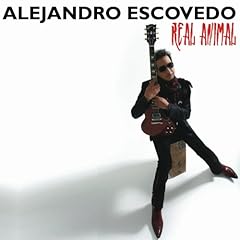
Review: Alejandro Escovedo – Real Animal

Full Disclosure: I have been evangelizing about Alejandro Escovedo since my brief stint in Austin, TX in 1990. I could write thousands of words chronicling Alejandro’s storied career, but you can find all that on his site or Wikipedia. I’ll just say that Alejandro has been an important, though little-known force in the underground music since the early 70’s. Along the way he has written some of the most compelling music to come out of America in last 30 years. In my opinion he is the most underrated singer/songwriter working today.

Now that we have that out of the way, on to Real Animal which was released on June 24th. Alejandro has always mined his personal life for songwriting material. Real Animal takes his narrative prowess to new level, laying out the blueprint of a life driven by music. And like the best songs often do, these paint such vivid pictures that the album plays like a movie in your head. A movie with the best soundtrack you’ve ever heard.

In Chelsea Hotel 78, a young punker stands on the sidewalk watching his friend Sid be carried off in cuffs for murder, while crunching guitars fight with swirling strings beneath. The “five feet four, trailer park kid” who stars in Real as Animal (a tribute to Alejandro’s beloved Iggy Pop) kicks “like a mule, twist like a tree” to a pummeling four-on-the-floor garage band beat. While the old man in the closer Slow Down takes his lover on a tour of his childhood home to the sweet strains of slide guitar and plucked cello. He tries to show her the beauty he
once found there, to show her why he loved this place so much. But in the end all he really has is this sage advice “Slow down, slow down/Yeah, it’s too fast/To love in this moment/Got to let go of the past.”

Throughout this album, from the raucous recitations of youthful hubris in searing tunes like Chip N’ Tony and Nuns Song to the still serenades of an old man remembering his childhood in Swallows of San Juan and Hollywood Hills, Escovedo is exploring his musical legacy as well as his personal one. He manages to touch every genre he has ever dallied in, often combining two or three in a single song. If this album had come out
during his near-fatal bout with Hepatitis a few years ago, it might be taken as a swan song. A final exclamation point to brilliant career, not unlike Warren Zevon’s amazing album, The Wind. But with Alejandro now disease free, I think we call look at this as a man assessing how he got to this point in his life, and where he is going next. I don’t know where that may be, but I have a feeling he’ll have some amazing stories to tell when he gets there.

What next?
Listen to some samples on his site

Buy the CD on Amazon

Download it on iTunes and get two bonus tracks plus a digital book with extensive liner notes.

Watch the “making of” video in my previous post.